Phytonaut LED Grow Light 120W: compact full-spectrum panel for 60×60 tents
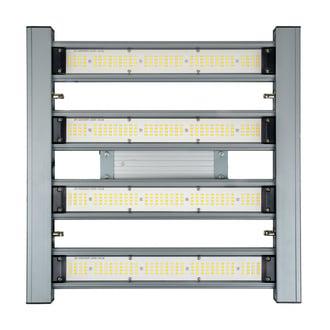
The Phytonaut LED Grow Light 120W is a full-spectrum LED panel that delivers 330.69 µmol/s PPF at 2.74 µmol/J across a 60×60 cm footprint. It's Zamnesia's own-brand entry-level fixture — Sanan and Osram diodes under a 40×40 cm passively cooled housing, dimmable by rotary knob or 0–10 V controller, rated IP65 and built to last 54,000+ hours.
Who the 120W Phytonaut is built for
This is the smallest fixture in the Phytonaut family — pitched squarely at growers running a 60×60 cm tent or a single-plant closet setup. If your footprint is bigger than 60×60, skip straight to the Phytonaut 240W or 320W. Trying to stretch a 120W panel across an 80×80 will give you a bright centre and weedy corners, and we'd rather you got the right wattage first time.
At 120 watts from the wall, this draws roughly the same as two old-school incandescent bulbs but pushes out the kind of photon density you used to need a 250W HPS for. The 120° beam angle spreads the light evenly across the canopy rather than concentrating it in a hot pool under the centre — which is exactly what you want in a small tent where you can't hang the fixture metres above the plants.
Sanan and Osram diodes — why the chip choice matters
The Phytonaut 120W uses Sanan and Osram full-spectrum chips. Sanan is one of the largest LED chip manufacturers in the world; Osram is the German specialist most premium horticultural fixtures lean on for the red wavelengths. The combination gives you a balanced full-spectrum output suitable for both vegetative and flowering stages — no separate "veg" and "bloom" switches to fiddle with.
Efficacy sits at 2.74 µmol/J. That's a respectable number for a 120 W fixture at this price point — every joule of electricity converts to 2.74 micromoles of photosynthetically active photons hitting your plants. For context: cheap blurple panels from a decade ago managed about 1.5 µmol/J. You're getting nearly double the light per watt of power consumed.
Passive cooling and IP65 — the practical bits
No fan. That's the headline. The aluminium housing acts as the heatsink, which means zero moving parts, zero fan noise, and zero failure points on the cooling side. We've seen too many cheap LED panels die because the fan bearing seized after 18 months in a humid tent. With passive cooling, the only thing that can fail is the driver — and at 54,000 hours rated lifespan, you're looking at roughly 12 years of 12/12 flowering cycles before the diodes hit 70% output.
IP65 means dust-tight and protected against water jets from any direction. You can spray your tent walls down without worrying about killing the fixture. Input voltage is 100–277 V, so it'll happily run on European mains without any converter faff.
Dimming: rotary knob and 0–10 V controller
The Phytonaut 120W gives you two ways to dim. The manual rotary dial on the fixture itself lets you turn output down for seedlings or clones — start at 30–50% for the first week, work up to full power as the plants establish. The 0–10 V port lets you wire the fixture into an external controller for automated dimming schedules or sunrise/sunset ramping, which is the move if you're running multiple fixtures off one controller.
Phytonaut 120W vs the rest of the range
| Fixture | Power | PPF | Coverage | Best for |
|---|---|---|---|---|
| Phytonaut 120W | 120 W | 330.69 µmol/s | 60×60 cm | Single plant, small tent |
| Phytonaut 240W | 240 W | 697.10 µmol/s | 80×80 cm | 2–3 plants, medium tent |
| Phytonaut 320W | 320 W | ~880 µmol/s | 100×100 cm | 3–4 plants, full tent |
| Phytonaut 480W | 480 W | ~1330 µmol/s | 120×120 cm | Large grow, 4+ plants |
Specifications
| Power draw | 120 W |
| PPF output | 330.69 µmol/s |
| Efficacy | 2.74 µmol/J |
| Coverage area | 60×60 cm |
| Beam angle | 120° |
| Fixture dimensions | 40 × 40 × 7 cm |
| Weight | 2.6 kg |
| Input voltage | 100–277 V |
| Diodes | Sanan + Osram, full spectrum |
| Cooling | Passive (silent) |
| Dimming | Manual rotary + 0–10 V control |
| IP rating | IP65 |
| Lifespan | ≥54,000 hours |
What's in the box
- Phytonaut LED Grow Light 120W fixture
- Steel hanging cables
- Mounting hooks
- Rope ratchets (for height adjustment)
- 3 m data cable (for 0–10 V controller connection)
How to set it up
- Hang the fixture from the top bar of your 60×60 cm tent using the supplied steel cables and rope ratchets. The ratchets let you raise or lower the panel without unhooking anything.
- Start the fixture 40–50 cm above the canopy for seedlings and clones. Drop to 30–35 cm for vegetative growth and 25–30 cm during flowering — check your specific plants for light stress signs.
- Set the rotary dimmer to roughly 50% for the first week after transplanting. Increase to 75% during week two, then full power once plants are established.
- For automated control, connect the 3 m data cable from the fixture's 0–10 V port to your external controller.
- Run an 18/6 light schedule during vegetative growth and switch to 12/12 to trigger flowering.
Honest limitations
At 120 W, this is a small-tent fixture. It will not flower a 4-plant SOG in an 80×80 — the edges of the canopy will stretch and the buds will be airy. If that's your setup, the 240W Phytonaut is the one. Also: passive cooling means the heatsink runs warm to the touch. That's normal, that's how it sheds heat, but don't mount it directly against a tent ceiling without the supplied hanging clearance.
Complete the setup with a 60×60 cm grow tent, an inline extraction fan with carbon filter, and a basic pH/EC pen. The Phytonaut 120W handles the light side of the equation — you'll still need airflow, smell control, and feeding kit to get from seed to harvest.
Frequently Asked Questions
What size tent does the Phytonaut 120W cover?
The Phytonaut 120W is built for a 60×60 cm footprint. The 120° beam angle distributes light evenly across that area with a PPF of 330.69 µmol/s. For 80×80 cm or larger, step up to the Phytonaut 240W or 320W.
Is the Phytonaut 120W silent?
Yes. The fixture uses passive cooling — an aluminium heatsink instead of a fan — so it makes zero noise. The only sound in your tent will be your extraction fan.
Can I dim the Phytonaut 120W?
Two ways: a manual rotary dimmer on the fixture itself, and a 0–10 V control port for external controllers. The 3 m data cable for the 0–10 V connection is included in the box.
How long will the Phytonaut 120W last?
The diodes are rated for at least 54,000 hours before dropping to 70% of original output. At a 12/12 flowering schedule that's over 12 years of continuous use, so for most home growers the driver will outlive several harvests.
What hanging height should I use?
Start at 40–50 cm above the canopy for seedlings, drop to 30–35 cm during veg, and run 25–30 cm in flower. Adjust based on how your plants respond — bleaching or curling tips mean the panel is too close.
Is the Phytonaut 120W waterproof?
It's rated IP65 — dust-tight and protected against water jets from any angle. You can spray your tent down without worrying about killing the fixture, though we wouldn't submerge it.
Last updated: April 2026