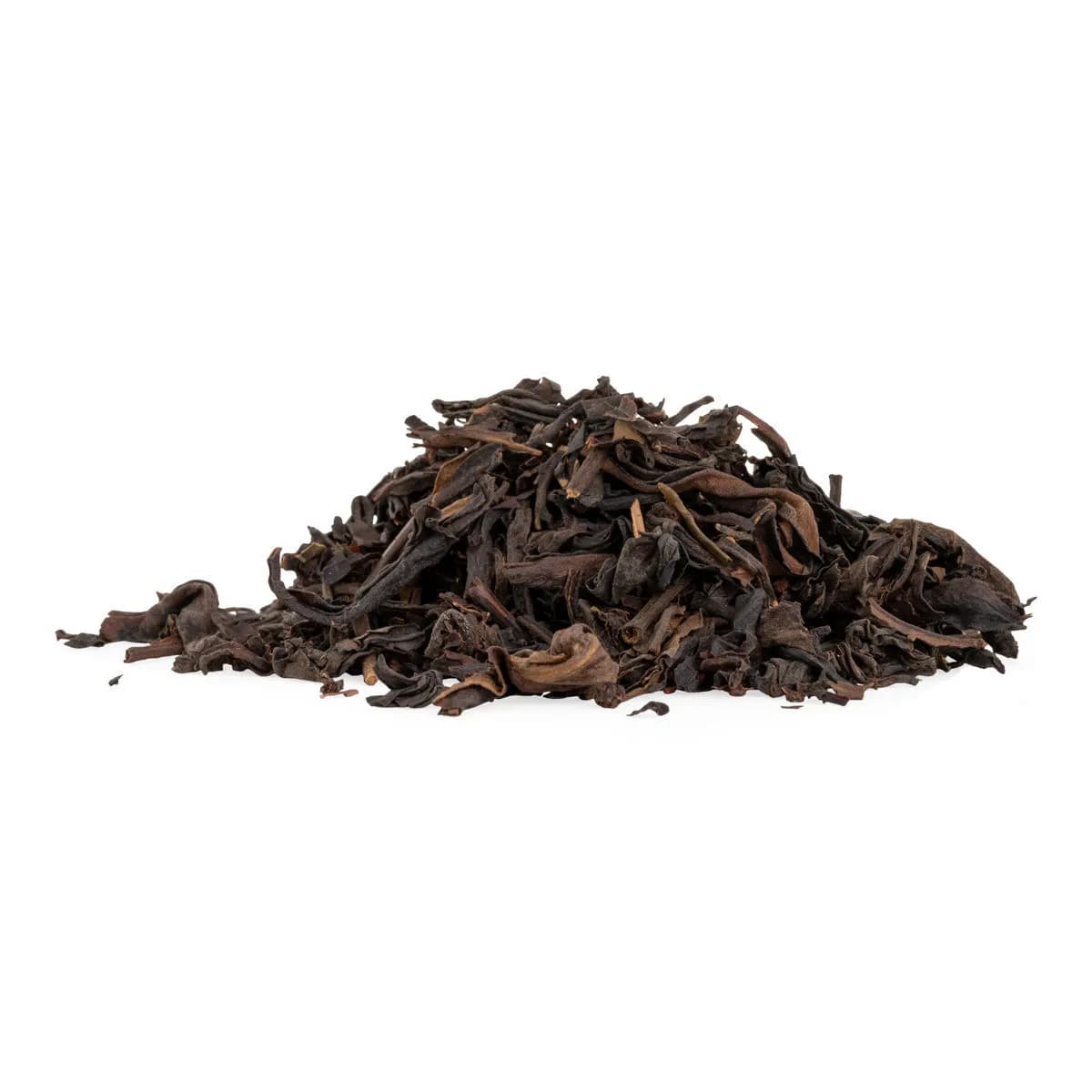
Taiwan Oolong Finest Tea is a traditionally processed loose-leaf oolong grown from special cultivars on Taiwanese slopes, partially oxidised to produce a rich, full-bodied cup with floral top notes and toasted, nutty depth. If you've only ever had supermarket oolong in a bag, this is the one that'll change your mind — proper leaf, proper fermentation, proper character.
Why this Taiwan oolong is worth the kettle time
Taiwan is the benchmark for oolong. The island inherited its tea expertise from Chinese growers in the late 1600s and has spent the last three centuries refining the craft on its misty mountain slopes. This particular loose-leaf oolong comes from special cultivars processed according to Taiwanese tradition — partial oxidation sitting somewhere between green and black tea, which is what gives oolong its signature split personality.
What you actually taste: floral and fruity notes up top (think orchid and stone fruit), then a warm, nutty, toasted finish that lingers. The leaves unfurl slowly in hot water and reward you across multiple infusions — three to five steeps from the same leaves is normal, and the flavour shifts each time. Compared to a Chinese Tieguanyin or a Da Hong Pao, this Taiwanese style tends to be lighter on the roast and more aromatic on the florals.
Oolong also sits in a useful middle ground caffeine-wise — less than coffee, more than green tea. According to Healthline's overview of oolong research, a cup delivers roughly 30–50mg of caffeine alongside L-theanine, which is why it feels alert without the edge. Research published in PMC (2023) on fermented oolong tea found that caffeine content varies with oxidation level, so cup-to-cup strength depends on how the leaves were processed.
What the research says about oolong tea
Oolong has been studied fairly extensively for its polyphenol content. Here's what's actually in the literature — framed honestly, not as marketing.
| Area of research | What studies observed | Source |
|---|---|---|
| Metabolism | A study in mice fed a high-fat, high-sugar diet gained less abdominal fat when given oolong extract | Medical News Today (2017) |
| Anti-inflammatory activity | Oolong extract at 100 µg/mL suppressed NLRP3 inflammasome activation in vitro | Pubmed ID 41097183 (2024) |
| Polyphenol content | Extract rich in flavonoids, condensed tannins and proanthocyanidins showed notable anti-inflammatory activity | PMC12526369 (2024) |
| Stress & relaxation | GABA-fortified oolong tea alleviated autonomic imbalance under acute stress, measured via heart rate variability | PMC10670354 (2023) |
| Cancer research | Ongoing studies investigating associations between tea consumption and lowered risk of certain cancers | Healthline overview |
None of this means oolong is medicine. It means it's a well-studied plant with interesting compounds, and researchers keep finding reasons to look closer. Worth knowing, not worth overselling.
How to brew Taiwan oolong properly
Brewing loose-leaf oolong isn't complicated, but there are a few things that make the difference between a great cup and a bitter disappointment. Water temperature matters more than most people think — too hot and you'll scorch the florals.
- Use about 5g of loose leaf per 200ml of water (roughly a heaped teaspoon per cup).
- Heat water to 85–95°C. Off-boil is fine — never use full rolling boil on oolong.
- Optional rinse: pour hot water over the leaves, swirl for 5 seconds, discard. Wakes the leaves up.
- First steep: 2–3 minutes. Pour off completely.
- Second steep: 3–4 minutes. Often the best cup of the session.
- Third, fourth, fifth steeps: add 30 seconds each time. Keep going until the leaves stop giving.
If you've got a small clay teapot or gaiwan, use the gongfu method instead — more leaf, less water, flash steeps of 20–40 seconds. Same leaves, eight or nine rounds. That's the traditional Taiwanese way and it's worth trying at least once.
Specifications
| Contents | 100g loose-leaf oolong tea |
| Ingredients | Oolong tea leaves (Camellia sinensis) |
| Origin | Taiwan |
| Processing | Partially oxidised, traditional Taiwanese method |
| Cultivation | Conventional |
| Taste profile | Floral, fruity, nutty, toasted |
| Caffeine | Approx. 30–50mg per cup |
| Packaging | Aroma-sealed |
| Servings per 100g | Approx. 20 cups (5g per cup) |
Honest limitations
A few things worth flagging before you order. This is conventional cultivation, not certified organic — if that matters to you, it's worth knowing upfront. The flavour profile is classic Taiwanese oolong, so if you're hunting for the heavy roasted character of a dark Wuyi rock tea, this isn't that. It's on the lighter, more aromatic end.
Also: oolong has caffeine. Research suggests 1–4 cups daily is a reasonable range for most adults, and pregnant or breastfeeding people are generally advised to stay under 2 cups (around 200mg caffeine). Oolong may interact with certain heart, blood sugar and blood pressure medications — if you're on any of those, have a word with your GP before making it a daily habit.
Pairs well with a proper gaiwan or small clay teapot for gongfu-style brewing, and a variable-temperature kettle if you want to nail that 85–95°C sweet spot without guessing. If you like this one, have a look at our green and black loose-leaf teas too — same shelf, different fermentation.
Frequently Asked Questions
What does oolong tea actually taste like?
This Taiwanese oolong leads with floral and fruity notes — orchid, stone fruit — and finishes with a toasted, nutty warmth. It sits between the grassy freshness of green tea and the malty depth of black tea, which is exactly what partial oxidation is meant to do.
How many times can I re-steep the leaves?
Three to five times with Western brewing, eight or nine with gongfu-style flash steeps. The flavour shifts with each infusion — florals early, nuttier and sweeter later. Stop when the leaves stop giving back.
How much caffeine is in a cup?
Roughly 30–50mg per cup, depending on steep time and leaf quantity. Less than coffee (around 95mg), more than green tea (around 25mg). Oolong also contains L-theanine, which tends to smooth out the caffeine feel.
Can I drink oolong every day?
Research suggests 1–4 cups daily is a reasonable range for most adults. Pregnant or breastfeeding people are generally advised to stay under 2 cups. If you take heart, blood pressure or blood sugar medication, check with your GP first — oolong can interact with those.
Should I rinse the leaves before brewing?
Optional, but we'd recommend it for loose-leaf oolong. A 5-second rinse with hot water wakes the tightly rolled leaves up, rinses off any tea dust, and makes the first proper steep more flavourful. Pour the rinse water away, then brew normally.
How do I store it to keep it fresh?
Keep the aroma-sealed packaging closed, store somewhere cool, dark and dry, away from strong smells (tea absorbs odours fast). An airtight tin works well once opened. Properly stored, loose-leaf oolong holds its character for 12–18 months.
Last updated: April 2026