Mikrodosering
af Cibdol
Vi mailer dig kun om dette produkt — ingen markedsføring.
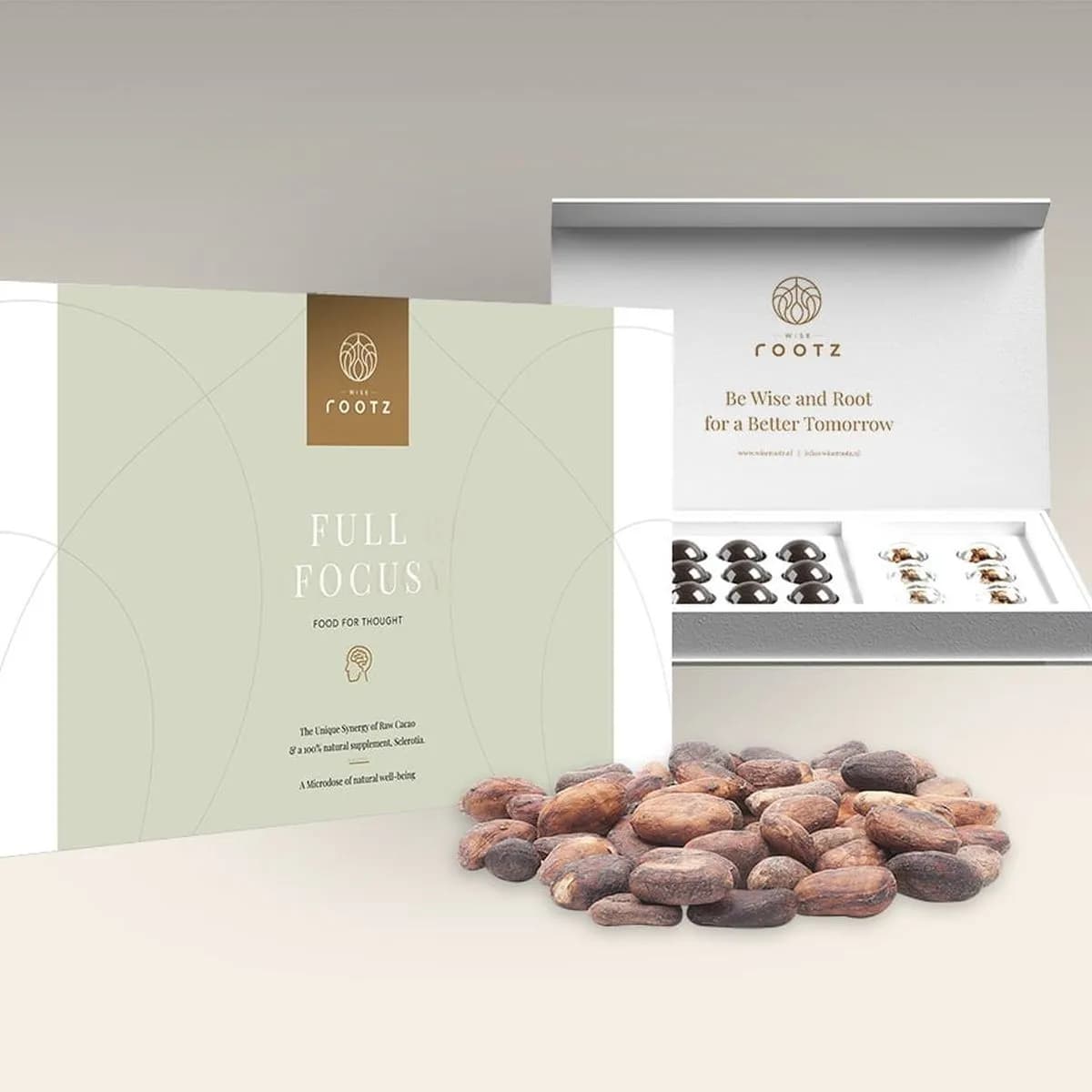
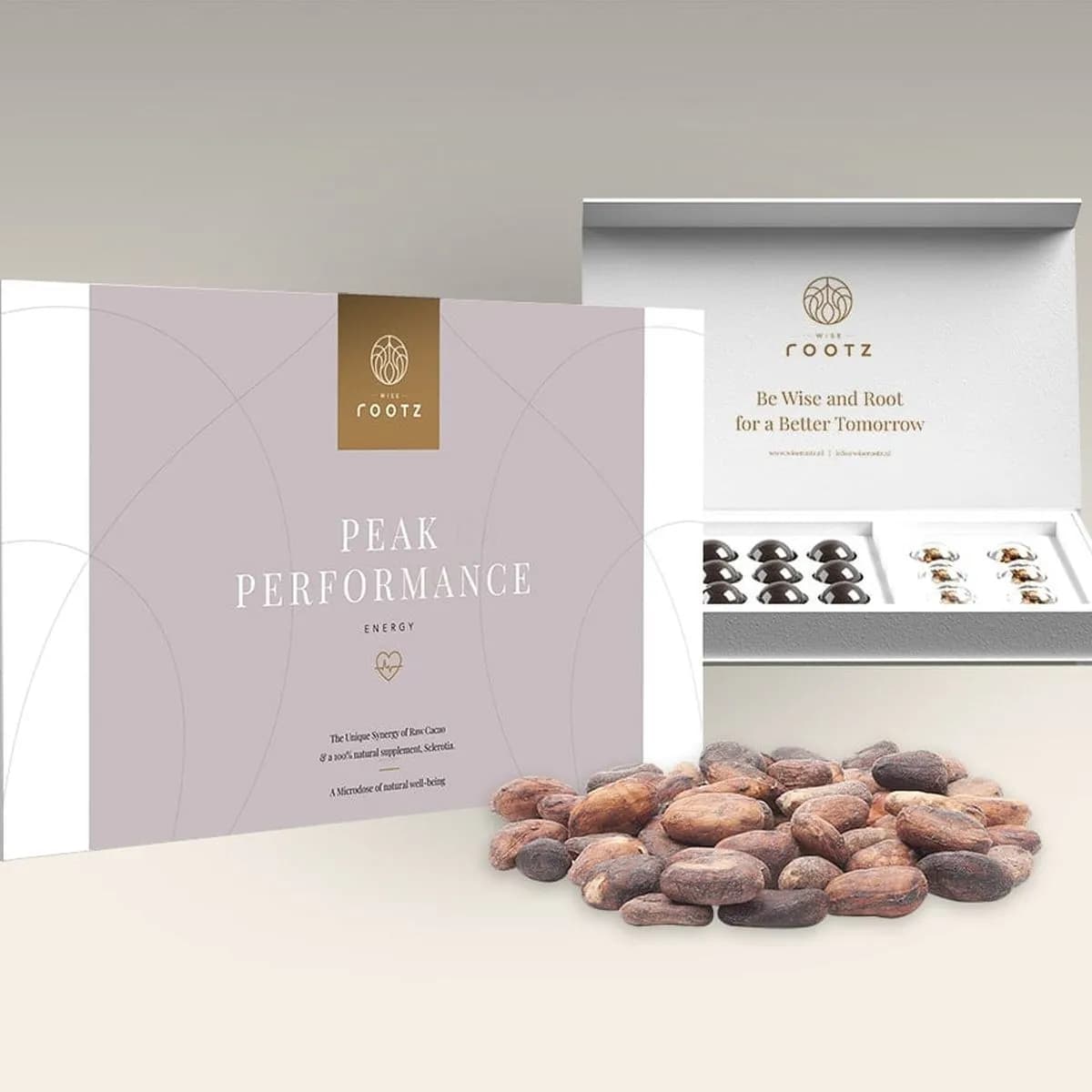
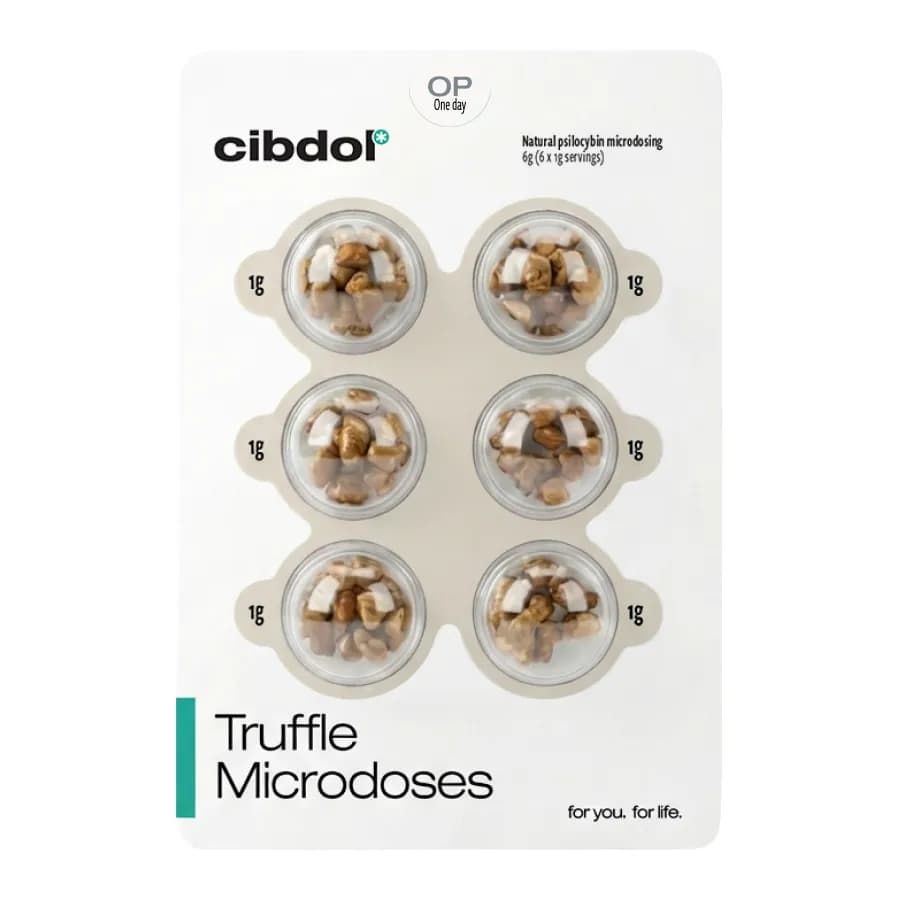
Cibdol Truffle Microdoses (OP) deliver six pre-portioned 1 g doses of Psilocybe tampanensis sclerotia, designed for a one-day-on, one-day-off microdosing schedule. Built for knowledge workers, students, and analysts who want sharper pattern recognition and sustained analytical focus without a perceptual shift. At Azarius we've carried microdosing truffles since the format first appeared on the Dutch market — and the OP is the product we hand to anyone who says "I need to think more clearly at work."
What sets this pack apart from the other two Cibdol protocols is the species inside. Psilocybe tampanensis is the strongest of the three — medium-strong potency compared to the mild P. mexicana (FP) and medium P. galindoi (SP). At 1 g fresh, the active compounds — psilocybin, psilocin, and baeocystine — stay well below the perceptual threshold, but the cognitive effects are noticeable within a week of consistent use. Users report cleaner convergent thinking, less mental clutter, and a sharper ability to hold complex problems in working memory.
The "OP" stands for One-Day Protocol: one day on, one day off. That alternating rhythm is the sweet spot between Fadiman's conservative 1-on-2-off and Stamets' intensive 4-5-on-2-off. You dose frequently enough to maintain momentum, but leave enough off-days to prevent tolerance from building. We've seen this schedule work particularly well for people with demanding analytical roles — programmers, researchers, financial analysts — who need consistency across the working week.
Each dose is 1 g of fresh Psilocybe tampanensis sclerotia. Fresh truffles contain 65-70% water, so 1 g fresh is roughly 0.3 g dry weight — equivalent to approximately 1-2 mg of psilocybin. That is firmly sub-perceptual: no visuals, no altered state, no impairment.
Microdose (this product): 1 g fresh / ~0.3 g dry / ~1-2 mg psilocybin. No perceptual effects. Cognitive enhancement only.
Individual response varies. If you are new to psilocybin microdosing, start with the Fadiman Protocol (FP) — it uses the mildest species and the most conservative schedule.
| Species | Psilocybe tampanensis (sclerotia) |
| Active compounds | Psilocybin (prodrug), psilocin (active metabolite, serotonergic 5-HT2A receptor agonist), baeocystine (minor tryptamine alkaloid) |
| Dose per portion | 1 g fresh sclerotia (~0.3 g dry, ~1-2 mg psilocybin) |
| Portions per pack | 6 |
| Protocol | One-Day Protocol — 1 day on, 1 day off |
| Active days per week | 3-4 |
| Character | Analytical focus, work performance, daily sharpness |
| Perceptual level | Sub-perceptual — no visuals, no altered state |
| Brand | Cibdol |
| Storage | Refrigerate at 2-8 C. Perishable — use within the shelf date on packaging. |
Pair with the other Cibdol protocols
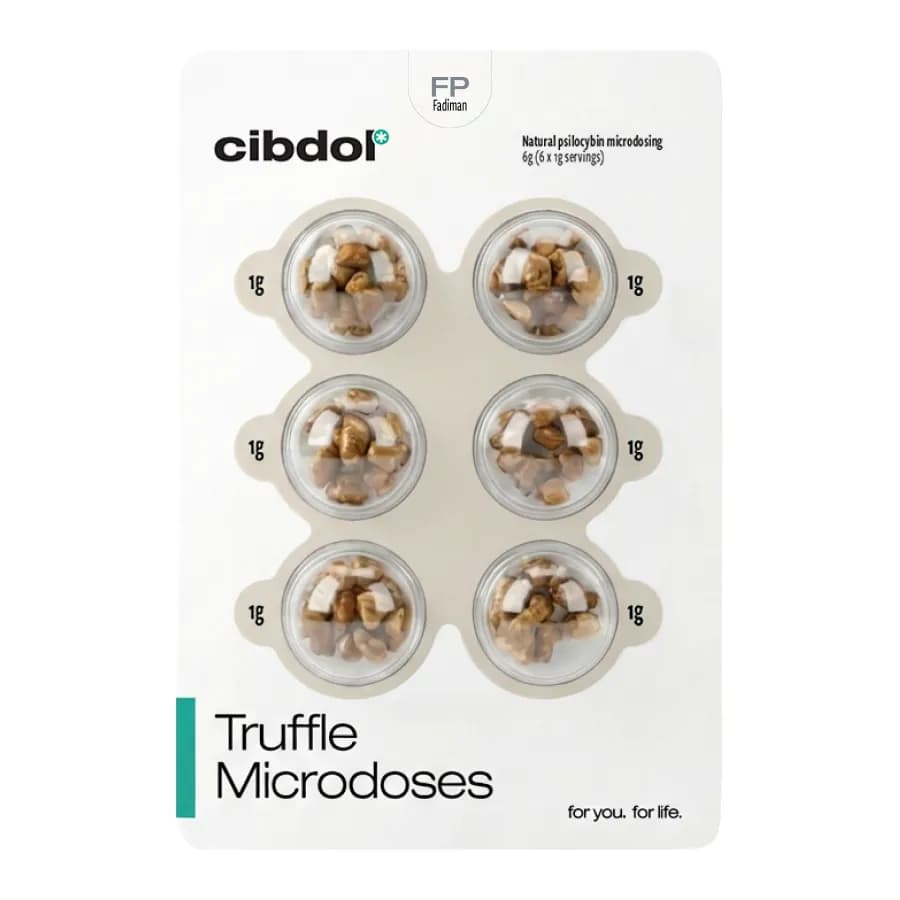
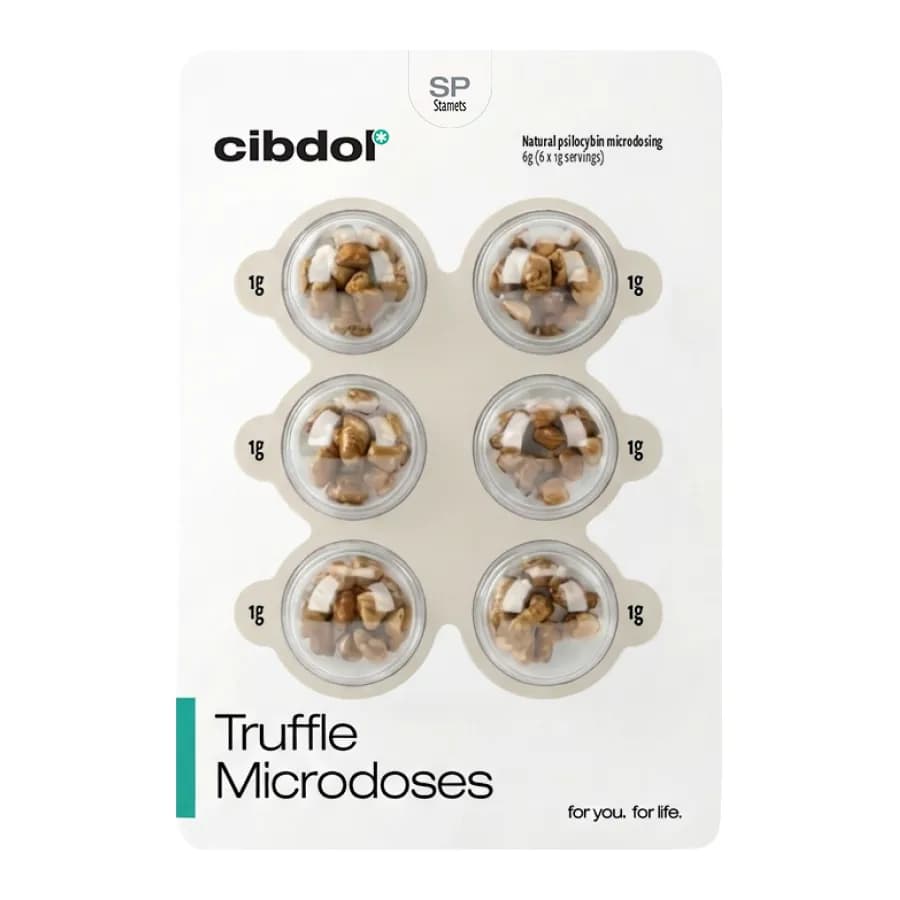
Try the Truffle Microdoses (SP) when your work shifts from analytical tasks to creative brainstorming — the Stamets Protocol with P. galindoi is tuned for divergent thinking and perspective shifts. For a gentler introduction to psilocybin microdosing, the Truffle Microdoses (FP) uses the mildest species on the most conservative schedule.
Every Psilocybe tampanensis truffle on the market today descends from a single wild specimen. In 1977, mycologist Steven Pollock discovered the species growing in a meadow near Tampa, Florida — the only time it has ever been found in the wild. Pollock collected spore prints and tissue samples before the habitat was paved over for development. That one collection became the genetic source for all cultivated P. tampanensis worldwide.
The species earned the nickname "Philosopher's Stone" for its distinctive character profile: clear-headed, analytical, and introspective rather than visual or uplifting. Unlike Psilocybe mexicana (used in Mesoamerican ceremonial contexts for centuries) or P. galindoi (a close relative of mexicana found in Mexican highlands), tampanensis has no indigenous history of use. It is entirely a product of modern mycology — discovered, cultivated, and studied within the scientific framework. That makes it fitting as the species behind a performance-focused microdosing protocol: its story is one of precision and intention, not tradition.
At a sub-perceptual 1 g fresh dose, Psilocybe tampanensis does not produce hallucinations, uplifting, or altered perception. What it does, based on the OP's character profile and user reports, is sharpen the kind of thinking that knowledge work demands.
Psilocybin and psilocin act primarily on serotonin 5-HT2A receptors. At microdose levels, this serotonergic activity is thought to promote neuroplasticity — the brain's ability to form and reorganise synaptic connections. A 2022 study published in Neuropsychopharmacology demonstrated that psilocybin promotes dendritic spine growth in cortical neurons, suggesting a structural basis for the cognitive flexibility users describe. These effects accumulate over weeks of consistent dosing rather than appearing after a single dose.
Cibdol rates the OP's character profile as follows:
| Effect | Rating |
|---|---|
| Daily sharpness | 4/5 |
| Analytical focus | 4/5 |
| Mental flexibility | 3/5 |
| Creative flow | 3/5 |
| Inner calm | 2/5 |
| Emotional stability | 2/5 |
The pattern is clear: the OP leans hard toward cognition rather than emotion. If you are looking for relaxation or mood stabilisation, the FP with P. mexicana scores higher on inner calm and emotional stability. If creative flow is the priority, the SP with P. galindoi is designed for that. The OP is a cognitive tool — treat it as such.
The Global Drug Survey, the world's largest annual survey on drug use, has consistently reported that psilocybin ranks among the safest psychoactive substances in terms of emergency medical treatment, even at full doses. At microdose levels, the safety margin is wider still.
Psilocybe tampanensis sclerotia have a distinctive earthy, nutty flavour with a sour tang that hits at the end. The texture is firm and slightly rubbery — denser than P. mexicana, which tends to be softer. At 1 g, you are chewing a piece roughly the size of a hazelnut. The taste is mild enough that most people handle it without masking, but if you prefer, wash it down with orange juice or a sip of ginger tea. Avoid mixing with a full meal — that slows absorption and delays the subtle onset of effects.
Psilocybin has a strong safety profile relative to other psychoactive substances. It is not physically addictive, carries very low physiological toxicity, and produces rapid tolerance that discourages compulsive redosing. The Global Drug Survey has consistently ranked psilocybin-containing products among the least likely to require emergency medical attention across all substance categories surveyed.
Contraindications: Do not use psilocybin microdoses if you have a personal or family history of psychosis or schizophrenia. Psilocybin acts on serotonin pathways, and combining it with SSRIs (selective serotonin reuptake inhibitors) or MAO inhibitors can cause unpredictable interactions. If you are on any serotonergic medication, speak with your prescribing doctor before starting a microdosing protocol.
This is not a recreational product. At 1 g fresh, you will not feel "high." There are no visuals, no altered perception, no impairment. If for any reason you feel uneasy after a dose, remember: the effects of psilocybin are temporary. They pass within hours, and at microdose levels, within 1-2 hours at most. Stay hydrated, stay in a comfortable environment, and wait it out.
Never combine with alcohol or other substances. Do not drive or operate heavy machinery until you know how your body responds to the protocol.
| Truffle Microdoses (OP) | Truffle Microdoses (SP) | Truffle Microdoses (FP) | |
|---|---|---|---|
| Species | Psilocybe tampanensis | Psilocybe galindoi | Psilocybe mexicana |
| Potency | Medium-strong (strongest) | Medium | Mild (gentlest) |
| Protocol | One-Day Protocol | Stamets Protocol | Fadiman Protocol |
| Schedule | 1 day on, 1 day off | 4-5 days on, 2-3 days off | 1 day on, 2 days off |
| Active days/week | 3-4 | 4-5 | 2-3 |
| Character | Analytical focus, daily sharpness | Creative flow, divergent thinking | Relaxation, emotional integration |
| Good for | Programmers, researchers, analysts, students with demanding cognitive workloads | Designers, writers, musicians, anyone in creative problem-solving roles | First-time microdosers, people seeking calm and emotional balance, those on stressful schedules |
| Dose per portion | 1 g fresh | 1 g fresh | 1 g fresh |
| Portions | 6 | 6 | 6 |
Psilocybe tampanensis sclerotia contain three principal tryptamine alkaloids:
| Compound | Role | Typical concentration (dry weight) |
|---|---|---|
| Psilocybin | Prodrug — converted to psilocin in the liver via dephosphorylation | 0.3-0.7% |
| Psilocin | Active metabolite — binds serotonin 5-HT2A receptors, responsible for cognitive and perceptual effects | 0.1-0.3% |
| Baeocystine | Minor tryptamine alkaloid — similar structure to psilocybin, contribution to overall effect is not fully characterised | Trace amounts |
Fresh sclerotia contain 65-70% water. A 1 g fresh dose yields approximately 0.3 g dry material, containing roughly 1-2 mg of psilocybin. At this level, psilocin concentrations in the brain remain below the threshold for perceptual changes, but sufficient to engage 5-HT2A receptor-mediated neuroplasticity pathways — including the dendritic spine growth documented in the 2022 Neuropsychopharmacology study and the default-mode network modulation observed in functional imaging research. These effects support the OP's character profile: clearer analytical thinking and better pattern recognition, without altered perception.
Related compounds in the tryptamine family include norbaeocystine, which is present in trace amounts and whose pharmacological contribution remains under investigation. The presence of multiple tryptamine alkaloids in sclerotia may produce a combined effect beyond what psilocybin alone delivers, though research into this interaction is ongoing. Nerve growth factor (NGF) stimulation and neurogenesis in the hippocampus have been observed in animal models dosed with psilocybin, adding to the mechanistic picture behind microdosing's reported cognitive benefits.
Each pack contains 6 individually portioned 1 g doses of fresh Psilocybe tampanensis sclerotia (also called philosopher's stones or magic truffles). The active compounds are psilocybin, psilocin, and baeocystine — all tryptamine alkaloids that act on serotonin receptors. At 1 g fresh, the dose is sub-perceptual.
Take one 1 g dose in the morning on an empty stomach. Chew thoroughly and swallow with water. Follow the one-day-on, one-day-off schedule — dose on Day 1, skip Day 2, repeat. Journal your focus and mood to track results over time.
No. One gram of fresh sclerotia contains approximately 1-2 mg of psilocybin, which is well below the perceptual threshold. You will not experience visuals, uplifting, or impairment. The effects are subtle and cognitive — sharper focus and clearer thinking that build over days and weeks.
The three protocols differ in species, schedule, and character. OP uses the strongest species (P. tampanensis) on an alternating-day schedule for analytical focus. SP uses P. galindoi on a 4-5-days-on rhythm for creative flow. FP uses the mildest species (P. mexicana) with the most rest days, suited for relaxation and first-time microdosers.
Psilocybin acts on serotonin pathways, and combining it with SSRIs or MAO inhibitors can produce unpredictable interactions. If you take any serotonergic medication, consult your prescribing doctor before starting any microdosing protocol. Do not self-adjust medication based on microdosing.
Keep the pack refrigerated at 2-8 C. Fresh sclerotia are perishable — do not freeze them, as this damages cell structure and degrades the active compounds. Use the doses within the shelf date printed on the packaging.
With 6 doses on a one-day-on, one-day-off schedule, one pack covers roughly 12 days. Most microdosing protocols recommend running for 4-8 weeks, so you would need 2-3 packs for a complete cycle before taking a break.
The nickname comes from the species' distinctive clear-headed, analytical character and its extraordinary origin. Steven Pollock discovered the only known wild specimen in Tampa, Florida in 1977. All cultivated P. tampanensis today descend from that single collection — a rarity in mycology that earned the species its mythic name.
Psilocybin has a strong safety profile: it is not addictive, carries very low physiological toxicity, and builds rapid tolerance that discourages overuse. The Global Drug Survey ranks psilocybin among the least likely substances to require emergency medical treatment. The main contraindications are a history of psychosis and concurrent use of serotonergic medications.
Last updated: April 2026

Denne produktbeskrivelse er udarbejdet med AI-assistance og gennemgået af Joshua Askew, Editorial Director.
Medicinsk forbehold. Dette indhold er udelukkende til orientering og udgør ikke medicinsk rådgivning. Konsulter en kvalificeret sundhedsperson, før du bruger et hvilket som helst stof.